 Sanghaya Channel
Grant Rant: Why Micro‑Founders Keep Getting Overlooked

Talking Points: Grant Fatigue, Micro-Founders, Nonprofit Industrial Complex, Resource Hoarding, Social Justice
As a new micro‑business founder with a stint in the nonprofit world, I have a grant rant I’ve wanted to get out there. (Throughout this piece, “micro‑business founder,” “solopreneur,” and “micro‑founder” are interchangeable.)
Promise vs. Reality
It’s encouraging to see small business grants or microgrants that support minority founders and businesses that work toward social change. Yet applicants are often asked to identify their niche, craft a polished story, and prove a competitive edge. Those requirements presume they already have a clear market position, sophisticated branding, and a track record—advantages most brand‑new micro‑businesses don’t possess. Consequently, countless solopreneurs get trapped in an endless loop of revised pitches and rejections.
Grant‑writing isn’t a talent contest—our value isn’t measured by a polished pitch, and our work isn’t ‘undeserving’ just because the system can’t fit it into a formulaic rubric.
Solo Founders Wearing Every Hat
Micro‑businesses are usually run by a single person—or a tiny team—without dedicated departments. Think of the attentive and restorative bodyworker, versatile pet‑sitter, thorough notary, or impactful consultant who facilitates tough conversations so people can confront their racist nonsense. While these solopreneurs juggle product/service development, communications, outreach, and bookkeeping, they’re also expected to spend countless hours on grant applications. Remember: running a business is a livelihood for many. The time spent applying often eclipses the capacity to grow, creating a double‑edged sword the current grant system fails to recognize. It expects of applicants unnecessary vulnerability and “scrappiness,” perpetuating competition and isolation versus fostering equity and social change. It’s exhausting.
Minoritized Folx Face a Funding Gap
I’ve asked myself why keep applying when the odds are stacked? Well, for one, startup capital is scarce for minoritized communities; many micro‑business owners must rely on personal savings or loans and donations from friends and family. AFRO points out that BIPOC‑owned businesses face a $40 billion annual financing gap, while the entire small‑business sector is missing roughly $1 trillion in capital. As a response to this, several grantors have heeded the call to fill this gap. Still, applicants are expected to make their applications “stand out” and to “know your business plan and numbers inside and out, and do your research on past award recipients.” Useful recommendations, but for one-person operations, this still requires immense time and energy.
Structural Mismatch with Nonprofit Infrastructure
Foundations, corporations, and governments fund both nonprofit and small business programs, yet the eligibility templates ask for things like audited finances and impact metrics that newly established micro‑businesses can’t readily produce. Large nonprofits already have the infrastructure, donor networks, and administrative platforms grantmakers expect. By contrast, micro‑enterprises rarely enjoy those built‑in advantages; limited access to professional accountants, legal counsel, and communications teams makes it difficult to meet the same checklist, let alone forge the collaborations that could bridge the gap.
The Nonprofit Industrial Complex
Platform and resource hoarding—often described as part of the nonprofit industrial complex (NPIC)—isn’t necessarily rooted in bad faith. Incite! shows us that the NPIC reproduces “surveillance, control, derailment, and everyday management of political movements.” Community‑Centric Fundraising adds that it “incentivizes top-down approaches to inequity, imposing the agenda of the wealthy onto the way nonprofits work, which nonprofits in turn impose through our engagement with communities.” Because micro‑businesses belong to those same communities, founders are forced either to abandon their original vision or to adopt a façade just to satisfy a grant checklist—erasing the potential of community‑based work or straight up pushing them out of the mainstream resource pool.
So, What Now?
For grantmakers and nonprofits alike, this is an invitation to intentionally reflect on your role in all this. Recognize that the notion of scarcity is engineered. Building resilient communities and more just economies requires sharing resources and space, while valuing the voices and knowledge of those also doing community-based work—many have been doing this work for free and at the high cost of emotional labor. Grant programs should therefore:
- Prioritize lived expertise over formulaic applications.
- Allocate seed funding for essential infrastructure: accounting, legal, technology, office equipment, and outreach.
- Create decision‑making structures that center the very founders and communities they aim to empower.
- And how about not just funding people for the labor they can produce? Consider invisibilized work and the emotional toll that accrues over time!
Ask yourselves, "What's your niche? How are you grantmaking or mobilising resources differently from others out there?"
LGBTQ laws and policies by state
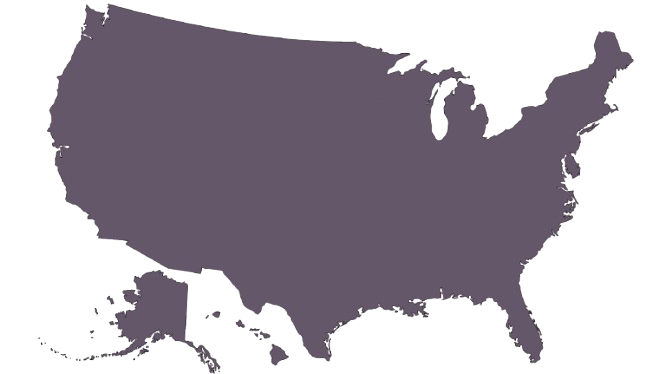
The Movement Advancement Project (MAP) tracks over 50 different LGBTQ-related laws and policies. This map shows the overall policy tallies (as distinct from sexual orientation or gender identity tallies) for each state, the District of Columbia, and the five populated U.S. territories.
You can search by state and issues including healthcare, relationship and parental recognition, nondiscrimination, identity documents, and so on. READ MORE: Snapshot: LGBTQ Equality by State
Washington state organization host a name and gender-marker change clinic

...Columbia City library branch was bustling with chatter and activity as volunteers with backgrounds as lawyers, paralegals, notaries, case workers and social workers helped around 100 people who sought guidance about changing their name or gender marker on legal documents.
Find out how this activist is supporting parents in the face of deportation

Julia opened the door a crack, saw Sandigo and then came out. Julia explained her husband had been detained days earlier while in a van with other immigrants on their way to a construction job.
After a brief conversation, Julia invited Sandigo, a notary and a volunteer into her small house.
Julia recalled that eight years ago her first husband, also Guatemalan, was deported, leaving her behind with their two American children, now 18 and 11 years old.
READ MORE: Fearful immigrants ask Florida activist to sign guardianship papers for their children
Demographics of Notaries Public (and women make up the majority)
- 75.0% of all notary publics are women, while 25.0% are men.
- The average notary public age is 42 years old.
- The most common ethnicity of notary publics is White (57.0%), followed by Hispanic or Latino (20.7%), Black or African American (10.3%) and Asian (6.3%).
- In 2022, women earned 89% of what men earned.
- 7% of all notary publics are LGBT.
- Notary publics are 52% more likely to work at private companies in comparison to government companies.
READ MORE: Notary Public demographics and statistics in the US
MORE COMPREHENSIVE DEMOGRAPHIC DATA: 2022 NNA Notary Census, Part 1: A new generation of Notaries?
Racist covenants are often found in title documents!
Digital notary startup Notarize is now offering free notarizations in an effort to eliminate racial covenants in title insurance documents.
The issue came to light after real estate brokerage Windermere Real Estate earlier this month publicized the existence of title documents with racist language such as “no person or persons of Asiatic, African or Negro blood, lineage, or extraction shall be permitted to occupy a portion of said property” as well as “this property shall not be resold, leased, rented or occupied except to or by persons of the Aryan race.”
Learn how this is being brought to light and what is being done to eliminate the existence of racist title documents! READ MORE: Notarize offers free notarizations to fight racist title language